TYROLIT Logo
Grinding fibre zirconium
Back to overview
Counsellor

Finding the Right Grinding Tool for Your Application

Share:
FacebookLinkedIn

Discover how to choose the optimal grinding tool for your specific needs. This guide helps professional users navigate the selection process, ensuring efficiency and precision in various applications.

How do you choose the perfect grinding tool for your needs?

Choosing the ideal grinding tool depends on factors such as material, grain and tool type. Professionals need to consider the specific requirements of their project to achieve optimal results and maximize the lifetime of the tool.

Grinding wheel on straight grinder
Mounted points ceramic on straight grinder
Rough grinding with CERABOND X on an angle grinder

Understanding the Basics of Grinding

Selecting the Perfect Grinding Tool for Metal Working Applications

In the metal industries, grinding is a critical process used to shape and finish components to precise dimensions and smooth surfaces. Whether it's for fabricating new parts or refurbishing old ones, grinding tools play a pivotal role. This process involves the removal of material from a workpiece using abrasive particles embedded in a grinding wheel or other tools. The choice of the right grinding tool can significantly impact the quality, efficiency, and cost-effectiveness of your metal working projects.

When selecting a grinding tool, it's essential to consider factors such as the type of metal being worked on, the desired finish, and the specific requirements of the task at hand. Different metals—such as aluminum, stainless steel, and hardened steel—require varying abrasives and bonding agents. Furthermore, the operational speed, cooling methods, and the physical dimensions of the grinding tool should align with your application needs to ensure optimal performance and longevity of both the tool and the workpiece.

Grinding steel

Which Grinding Tools Are Suited for Which Application

For general metal working tasks, a variety of grinding tools are available, each designed to meet specific requirements.

For instance, aluminium oxide grinding wheels are excellent for grinding softer metals like aluminium and bronze, thanks to their durability and ability to provide a smooth finish. On the other hand, silicon carbide grinding wheels are more suited for hard metals such as cast iron and hard alloys due to their superior cutting ability and resistance to wear.

Diamond grinding wheels are the go-to choice for grinding very hard materials, including carbide and certain types of hardened steel. These wheels offer unparalleled precision and can achieve extremely fine finishes, making them ideal for applications requiring tight tolerances. Additionally, ceramic and CBN (cubic boron nitride) grinding tools are highly effective for high-speed grinding operations, providing excellent durability and material removal rates.

Selecting the right grinding tool ensures higher efficiency, reduces downtime, and extends the lifespan of both the grinding tool and the workpiece.

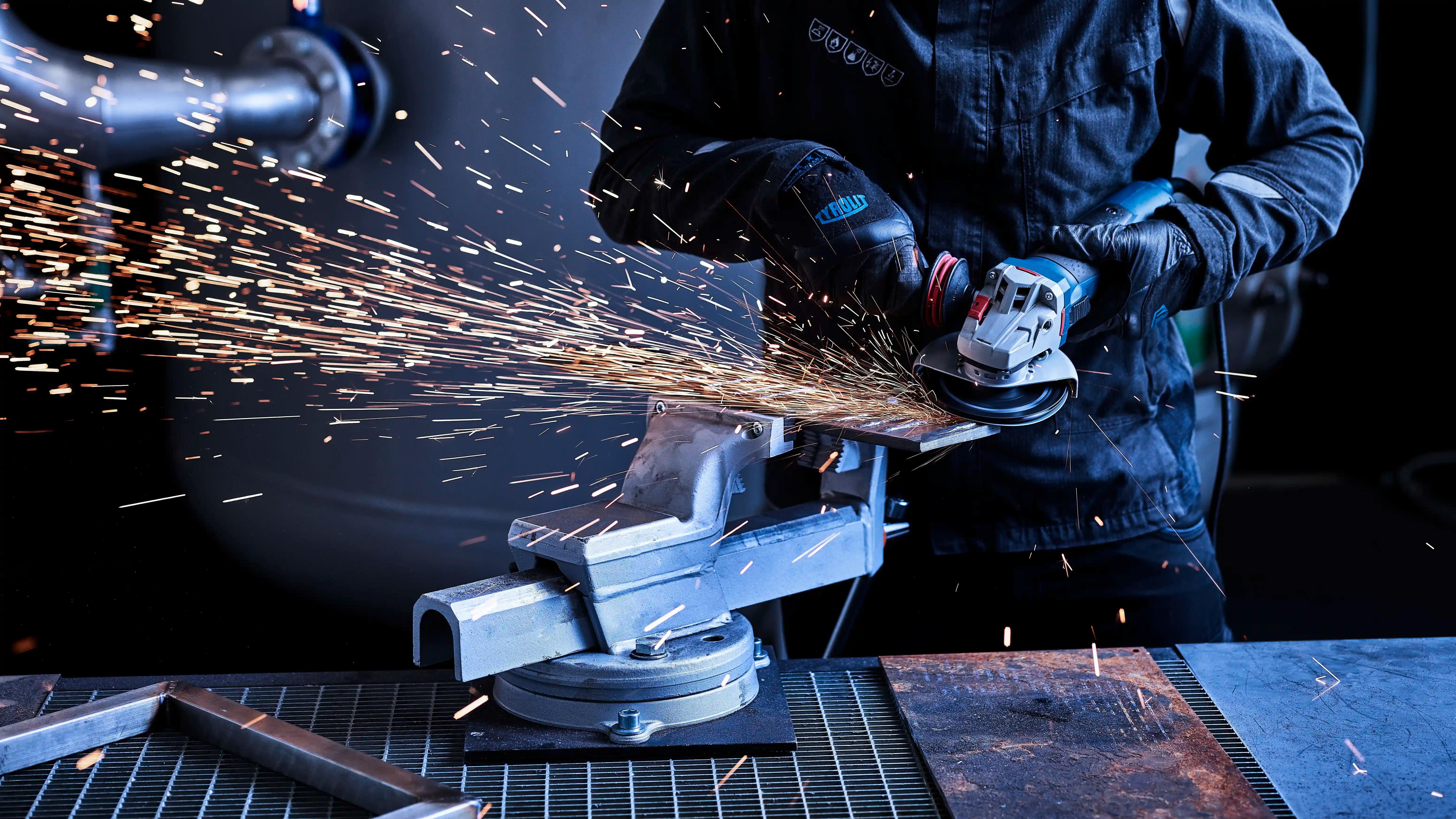
Grinding with an angle grinder

Optimizing Your Metal Working Process

To optimize your metal working process, it's crucial to match the grinding tool to the specific material and application. This entails not only choosing the right type of abrasive but also considering the wheel grade, grit size, and bonding material. For example, a softer grade wheel is preferable for tasks that require a smoother finish, while a harder grade wheel is suitable for high-stock removal applications. Grit size also matters: coarser grits are used for rapid material removal, whereas finer grits achieve a smoother surface finish.

In conclusion, understanding the various aspects of grinding tools and their applications in metal working can vastly improve your manufacturing process. By carefully selecting the appropriate grinding tool for your specific needs, you can achieve superior results, enhance productivity, and prolong the life of your tools and machinery.

Happy grinding!

Cup wheel on angle grinder

FAQ: Choosing the Correct Grinding Tool

When selecting a grinding tool, consider factors such as the material you are working with, the desired finish, the speed of the grinding machine, and the specific application requirements. Different materials and applications may require different types of abrasives, grit sizes, and bonding materials.

The choice of abrasive material depends on the hardness and type of material you are grinding. For example, aluminium oxide is suitable for grinding steel and stainless steel, while silicon carbide is ideal for non-ferrous metals, cast iron, and ceramics. Diamond and cubic boron nitride (CBN) abrasives are used for very hard materials like carbide and hardened steel.

The bonding material holds the abrasive grains together and determines the strength and durability of the grinding tool. Common bonding materials include vitrified bonds, which are strong and heat-resistant, and resin bonds, which are more flexible and suited for applications requiring a smoother finish. The choice of bonding material affects the tool's performance and lifespan.

Finding the Right Grinding Tool for Your Application

At Tyrolit, we pride ourselves on offering the best solutions for your grinding needs. With a portfolio of over 80,000 products, we are the market leader in abrasives, backed by unparalleled technological expertise. Our extensive range ensures that you will find the perfect tool tailored to your specific application, whether it’s for industrial, construction, or precision engineering purposes. Trust in our commitment to quality and innovation to deliver optimal performance and efficiency in all your grinding tasks.

Share:
FacebookLinkedIn

Related Posts

Non-Woven Abrasives by Tyrolit

Non-Woven Abrasives by Tyrolit

Long lifetimes, flawless surfaces and maximum efficiency decide over the profitability of your surface treatment operations. Tyrolit Non-Woven Abrasives are high performance grinding and polishing solutions designed for versatile applications. Perfect for both professional and industrial use, these tools combine advanced materials with an exceptional flexibility.

Learn more